



Basement Wall Sealing in Erie: Stop Damp Walls Before They Get Worse
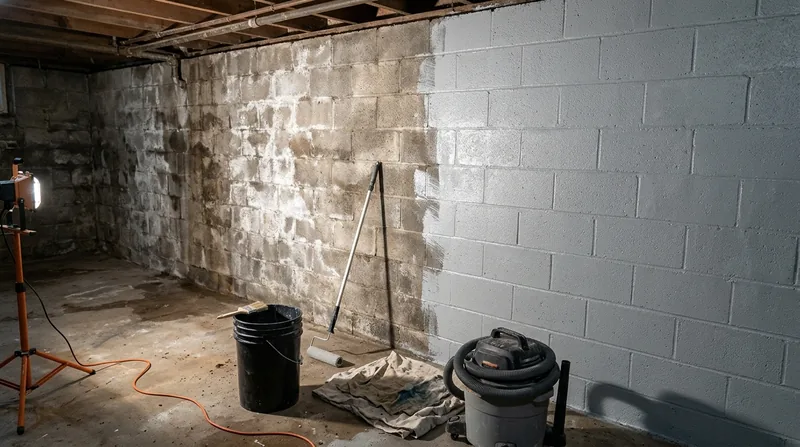
If your basement walls sweat, show white powder, or go dark after every Erie rain, Basement Wall Sealing in Erie is the first step to figure out what you are actually dealing with. Most of the city sits on flat glacial clay, silt and sand where the water table stays high, so walls in Downtown foursquares, Little Italy brick rowhouses and Sterrettania frame homes stay wet long after the storm passes. Glenwood Park bungalows with partly finished lower levels and Millcreek ranches with poured or block walls all run into the same problem: moisture moves through the concrete or block and shows up inside. A sealer can fix minor dampness, but it will not hold back hydrostatic pressure, and we tell you which one you have before we quote anything. Start with a free basement inspection so the diagnosis is based on the wall, not a guess.
Why Erie Basements Leak: Glacial Clay, Frost and Lake-Effect Melt
Erie does not have a marine fog problem, it has a frost and clay problem. The ground freezes deep, thaws in March and April, and the meltwater has nowhere to go because the glacial clay under most of the city drains slowly. Add lake-effect snow piled against the foundation and summer storms that dump an inch in an hour, and the soil around your footing stays saturated. That is when water finds the weak point in a stone, rubble or early block wall.
- Hydrostatic pressure pushes water through porous block and old mortar joints in 1900s brick and frame homes.
- Freeze-thaw cycles open hairline cracks in poured walls across Harborcreek and Millcreek.
- Efflorescence, the white salt bloom on the wall, tells you moisture is moving through the concrete.
- Bluff-top homes in Lawrence Park face undercutting at the lower wall where shoreline erosion works the base.
- Downspouts that dump at the corner send roof water straight back to the footing drain.
Sealing handles the surface dampness. When the wall is wet from the outside in, the fix is drainage, not paint.
Key info: A 1920s foursquare in Little Italy with a rubble stone wall and efflorescence is a drainage problem, not a sealer problem. A 1990s poured wall in Fairview with light condensation is a good candidate for sealing. Same city, two different answers.
For the official word on construction and property maintenance requirements in the city, check the City of Erie website before you schedule structural work.
How We Seal Basement Walls in Erie, Step by Step
We do not open a bucket of sealer and start rolling. The wall has to be read first. We check for efflorescence, test for moisture migration, look at the mortar joints, and check the grading and downspouts outside. If the wall is actively weeping under pressure, we say so and point you to an interior drain tile system instead of selling you a coating that will blister in a year.
- We inspect the wall and the exterior grade to confirm the moisture source.
- We remove efflorescence and loose parging with a wire brush and masonry cleaner.
- We fill hairline cracks and open mortar joints before any coating goes on.
- We apply a penetrating sealer on damp-prone block or a membrane sealer on poured walls.
- We extend downspouts and correct the grade so water sheds away from the footing.
The sealer is only as good as the prep under it, and the prep is where most quick jobs fail.
Key info: On a 1950s Cape Cod in Glenwood Park, we removed heavy efflorescence from a block wall, sealed two mortar joints, and applied a breathable membrane. The wall stayed dry through the spring melt because the source was surface dampness, not pressure.
Sealing Methods We Use and When Each One Fits
Not every wall takes the same product. Block walls breathe differently than poured walls, and a stone wall in Lawrence Park behaves differently than a 2005 poured basement in Edinboro. Here is how we match the method to the wall.
| Approach | Description | Best for |
|---|---|---|
| Penetrating sealer | Sinks into the concrete and blocks capillary moisture without trapping vapor. | Damp block walls in older Erie homes with light seepage. |
| Membrane sealer | Forms a flexible film over the surface and bridges hairline cracks. | Poured walls in Millcreek and Harborcreek ranches. |
| Crack and joint repair | Parging and mortar repair before sealing, so the coating has a solid base. | Rubble and early block walls with open joints. |
| Drainage correction | Downspout extensions and regrading to move roof and surface water away. | Any wall where the wet corner traces back to a downspout. |
| Pressure relief (referral) | Interior perimeter drain and sump when the wall is under hydrostatic pressure. | Walls that weep at the floor joint after every storm. |
If the table points to pressure relief, we tell you that on the inspection, not after the sealer fails.
Basement Wall Sealing Cost in Erie: What to Expect
Most basement wall sealing jobs in Erie start around $1,500, and that covers a typical basement wall run with prep, efflorescence removal, crack and joint work, and one sealer application. The number moves with square footage, wall condition, and how much prep the wall needs. A rough rubble wall in a 1910s Sterrettania home takes more labor than a clean poured wall in a 2010 Fairview subdivision.
Access matters too. A finished basement with paneling and stored belongings takes longer to protect and work around than an empty one. If the inspection finds hydrostatic pressure, the real cost is drainage, and sealing alone would be money spent on the wrong fix. Get two or three estimates, ask what prep is included, and compare the scope, not just the bottom line. Our full pricing overview lays out how we build the number.
Basement Wall Sealing Near Me: How to Vet a Contractor Around Erie
When you search for basement wall sealing near me, you get a mix of dedicated waterproofing outfits, general foundation firms, and painters who own a sprayer. Ask what they actually do all day. A dedicated waterproofing specialist reads the wall, explains the difference between dampness and pressure, and tells you when sealing is not the answer. That honesty is the filter.
- Confirm the company is licensed and insured, and ask for a certificate before work starts.
- Get two or three written estimates with the prep steps spelled out.
- Ask for local references from jobs in Erie, Millcreek or Harborcreek, not out-of-state photos.
- Check whether a permit is needed for any structural or drainage alteration, and call the local building department to verify.
- Ask how they handle a wall that turns out to be under pressure after prep begins.
If the answers are vague, keep calling. Contact Erie Waterproofing and we will walk you through what your wall needs, even if that answer is not a sealer.
Basement Wall Sealing in Erie: Pricing Guide
| Service | Price | Details |
|---|---|---|
| Single wall sealing (block or poured) | Starting at $1,500 | Includes efflorescence removal, crack and joint prep, and one sealer application on a typical wall run. |
| Full basement perimeter sealing | Starting at $2,800 | Covers all four walls, more prep time, and finished-space protection; price rises with wall condition. |
| Rubble or early block wall restoration | On estimate | Old mortar joints and uneven stone need parging and repair before any sealer can hold. |
| Drainage correction add-on | Starting at $450 | Downspout extensions and regrading at wet corners, quoted with the sealing scope. |
| Travel | Included | In Erie and surrounding areas, no separate call-out or mileage fee. |
| Estimate | Free | Response within 24h at (814) 990-9388, no obligation to book. |
Indicative pricing, the exact cost depends on square footage, finish, and site access. Free personalized estimate within 24h at (814) 990-9388.


