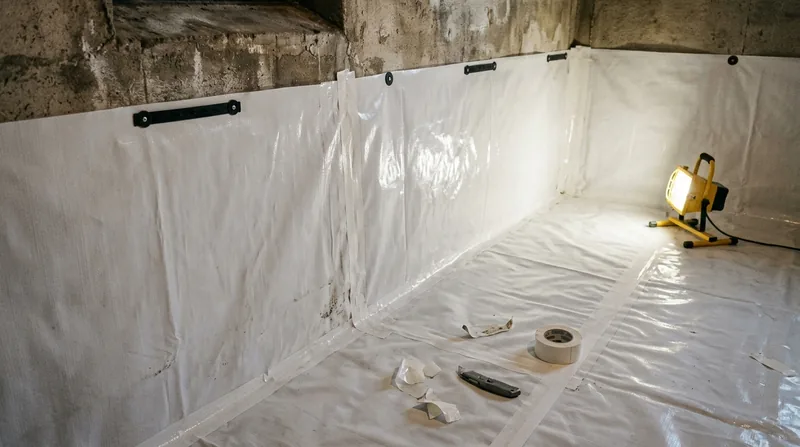




Erie sits on a flat lake plain of glacial clay, silt and sand where the water table stays high most of the year, and that ground holds moisture against your foundation instead of letting it drain away. In the 1900s brick foursquares of Little Italy and Sterrettania, the stone and rubble basement walls wick that moisture straight through the mortar. Out in the Harborcreek and Millcreek ranches, the poured walls sweat from the humid side. Vapor Barrier Installation in Erie puts a heavy-duty sheet across those walls and the slab, seals the seams and terminations, and stops ground moisture from feeding the damp, musty air in your lower level. We install it as part of a complete basement waterproofing plan, tied into the drainage and sump so the barrier is not fighting water it cannot handle alone.
Why Vapor Barrier Installation Matters in Erie's Glacial Clay Basements
Most of Erie's housing stock was built long before anyone thought about below-slab moisture control. Stone and early block walls in Downtown and Little Italy pull groundwater in through the mortar joints, and the flat clay plain keeps that water right where it is. Add lake-effect snow, deep frost and the annual freeze-thaw cycle, and every winter pushes more moisture against the foundation. The result is efflorescence on the walls, a musty basement smell and damp storage you cannot use.
- Glacial clay soil traps water against the footing and holds the water table high through spring melt.
- Stone, rubble and early block walls in older Erie homes wick moisture inward through the mortar.
- Poured basements in Fairview and Edinboro subdivisions still sweat from slab and wall vapor drive.
- Freeze-thaw cycles open hairline cracks that let more moisture past the wall surface each year.
A vapor barrier addresses the moisture that comes through the wall and slab itself, the part that drain tile and a sump pump cannot stop.
Key info: A Glenwood Park bungalow with a partly finished basement often shows white efflorescence along the lower block courses and a musty smell that returns every spring. That is vapor drive through the wall, not a leak, and a sealed vapor barrier is the right first step.
Permits and code requirements for below-grade work vary by jurisdiction, so verify any scope with the City of Erie building department before work begins.
How We Install Vapor Barriers in Erie Basements
We start by finding out where the moisture is actually coming from. A wall that weeps after rain is a different problem from a slab that stays damp all summer, and the barrier layout changes with the answer. On stone and rubble walls we parge and flatten the surface first so the sheet sits tight. On poured walls we grind and fill any honeycomb or tie holes before the membrane goes up. Then we seal every seam, tape every termination and tie the barrier into the sump basin and interior perimeter drain where one is present.
- We inspect the walls, slab and cove joint and check for active seepage, efflorescence and prior patch work.
- We correct surface defects with parging or hydraulic cement so the barrier has a clean, continuous substrate.
- We install heavy-duty vapor barrier sheets across the walls and slab, overlapping and sealing all seams.
- We tape terminations at the cove, rim and any penetrations, then integrate the barrier with the sump basin and discharge line.
- We test the assembly and walk you through what the barrier does and does not stop.
If the inspection shows hydrostatic pressure pushing water through the cove joint, we say so and recommend an interior drain tile system before the barrier goes on, because a sheet alone cannot hold back a rising water table.
Key info: In a Lawrence Park bluff-top home with stone and concrete walls, we parged the lower courses, sealed the cove and ran the barrier down into a new sump basin. The wall stopped sweating within a week of the spring thaw.
Vapor Barrier Approaches We Use in Erie
Not every basement gets the same barrier detail. The wall material, the amount of moisture and whether a drainage system is already in place all decide which approach fits. Here is how we match the method to the house.
| Approach | Description | Best for |
|---|---|---|
| Wall and slab sheet barrier | Heavy-duty sheet across walls and floor with sealed seams and taped terminations. | Damp, musty basements with no active seepage. |
| Dimple board drainage mat | Drainage mat against the wall that channels water down to the perimeter drain. | Stone and rubble walls in older Erie homes. |
| Barrier with sump integration | Sheet tied into the sump basin and discharge line with a sealed penetration. | Basements with an existing interior drain and pump. |
| Parging plus sealed barrier | Surface repair first, then a continuous membrane over the repaired wall. | Crumbling mortar and honeycombed poured walls. |
We pick the approach after the inspection, not before, so the barrier matches the moisture you actually have.
Vapor Barrier Installation Cost in Erie: What to Expect
Most Erie vapor barrier work starts at From $3/sq ft for a standard wall and slab sheet installation with sealed seams and taped terminations. That figure moves with the condition of the walls, the size of the basement and whether the barrier has to integrate with a sump and drain system. A stone wall that needs parging first costs more than a clean poured wall. A Fairview basement with a finished ceiling and stored belongings takes longer to prep and protect than an empty one.
Getting two or three written estimates is the smart move. Ask each contractor to specify the barrier material, the seam and termination details and whether drainage work is included or priced separately. A low number that skips the parging or the sump integration is not the same job. Our full pricing overview shows how the line items break down.
Vapor Barrier Installation Near Me: What Erie Homeowners Should Ask Before Hiring
Erie has plenty of contractors who will quote a barrier, and the differences show up after the job. Ask for proof of licensing and insurance before anyone steps into your basement, and get the certificate sent to you directly. Ask for references from jobs in the same kind of housing stock you own, whether that is a 1920s brick foursquare or a 1990s poured basement. And ask who handles any permit the work requires, because drainage alterations and sump discharge connections can trigger one depending on the jurisdiction.
Confirm what the quote covers in writing: material spec, seam sealing, termination taping, sump integration and cleanup. Ask whether the contractor will tell you plainly when the real problem is hydrostatic pressure and a barrier is not the whole answer. A straight answer on that question tells you more than any brochure. You can request a free estimate and we will walk the basement with you before any number is discussed.
When a Vapor Barrier Is the Right Call in Erie, and When It Is Not
We would rather tell you the truth than sell a sheet you do not need. A vapor barrier solves moisture that moves through the wall and slab as vapor. It does not stop standing water, and it does not hold back a water table that rises through the cove joint every spring. In a Millcreek ranch with damp walls and a musty smell, the barrier is often the whole fix. In a Downtown stone basement with water running across the floor after a storm, the barrier comes after drainage, not instead of it.
- Choose a barrier when walls sweat, efflorescence returns and the smell is musty rather than wet.
- Add drainage first when water pools at the cove joint or the floor stays wet after rain.
- Repair active cracks with epoxy or polyurethane injection before covering the wall.
- Verify the sump pump and check valve work before the barrier ties into the basin.
We will tell you which category your basement falls into during the inspection, and we will not install a barrier over a problem it cannot solve.
Vapor Barrier Installation in Erie: Pricing Guide
| Service | Price | Details |
|---|---|---|
| Wall and slab vapor barrier | Starting at $3/sq ft | Includes heavy-duty sheet, sealed seams and taped terminations; wall condition moves the price. |
| Dimple board drainage mat | Starting at $4/sq ft | Drainage mat against the wall channeling water to the perimeter drain; stone walls cost more. |
| Barrier with sump integration | Starting at $4.50/sq ft | Sheet tied into sump basin and discharge line with sealed penetration and check valve review. |
| Parging plus sealed barrier | On estimate | Surface repair first, then continuous membrane; crumbling mortar and honeycomb need an on-site look. |
| Travel | Included | In Erie and surrounding areas, no separate call-out or mileage fee. |
| Estimate | Free | Response within 24h at (814) 990-9388, no obligation to book. |
Indicative pricing, the exact cost depends on square footage, finish, and site access. Free personalized estimate within 24h at (814) 990-9388.


